

Servicing Electric Forklifts: Studies Show Significant TCO Cost Reduction Compared to Internal Combustion Counterparts
As the forklift industry continues to shift toward cleaner and more efficient energy solutions, electric forklifts have become a popular choice for businesses. They offer quieter operation, zero on-site emissions, and fewer moving parts than their internal combustion counterparts.
However, while they do provide significant operational and environmental benefits, electric forklifts still require regular upkeep to keep them running smoothly for years to come.
In this blog, we’ll explore the key aspects of servicing electric forklifts, from general maintenance best practices to the latest diagnostic technologies that minimize downtime and costs.
Do Electric Forklifts Need Less Maintenance?
One of the biggest advantages of electric forklifts is their inherently simpler design. An internal combustion (IC) engine can have hundreds of moving parts—many of which are subject to friction, wear, and potential mechanical failure. Electric motors, by contrast, consist of just a few moving components. Fewer moving parts translate directly into fewer points of failure and less overall maintenance.
In addition to the motor’s simplicity, electric forklifts benefit from regenerative braking. This feature captures kinetic energy during deceleration and channels it back into the battery, rather than wasting it as heat. Consequently, there’s significantly less wear and tear on brake pads and rotors, meaning operators can expect fewer brake replacements compared to IC engine forklifts.
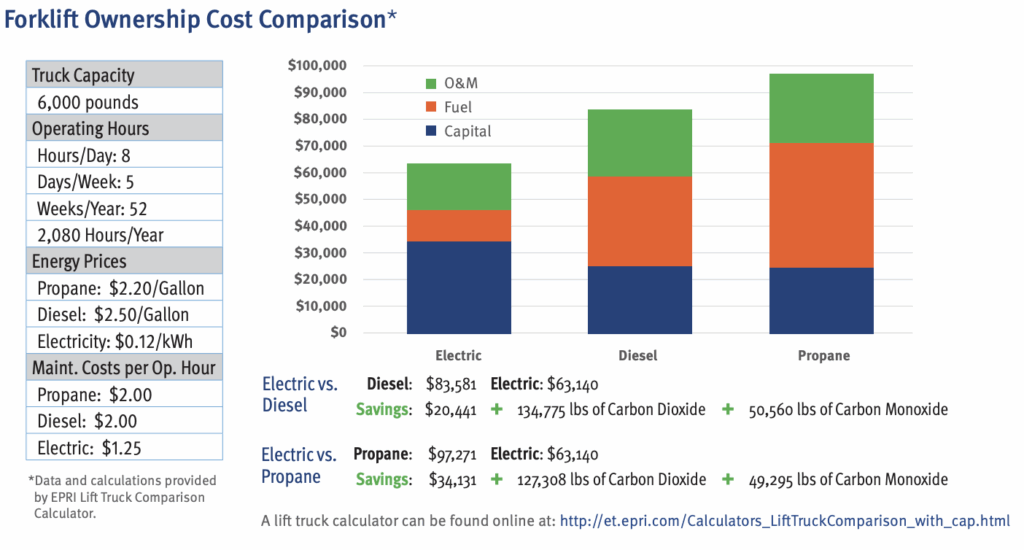
With all these mechanical efficiencies, some studies suggest that electric forklifts can reduce maintenance costs by up to 35% compared to internal combustion forklifts. Additional significant savings – up to 80% in some cases – are realized when viewing overall total cost of ownership (TCO) that also takes into account fuel cost savings. This reduction can translate into substantial cost savings over the lifetime of the machine.
How To Maintain Electric Forklifts
While electric forklifts do require less attention than their diesel or propane counterparts, they aren’t maintenance-free.
Certain tasks remain essential to ensure longevity, safety, and optimal performance:
- Battery Care
- Regular Inspections: Check for any signs of corrosion on terminals or connectors. Corrosion can affect current flow and shorten battery life.
- Cleaning: Keep the battery and surrounding area free of debris, dirt, or moisture that might compromise performance.
- Brake System
- Periodic Brake Checks: Even though regenerative braking lowers wear and tear, you should still inspect the brake system periodically to ensure optimal performance.
- Tire Inspections
- Proper Inflation and Wear: Tires on electric forklifts may last longer than on internal combustion machines due to more controlled acceleration. However, routine checks for correct inflation and tread condition remain vital for safety and fuel efficiency.
- Software Updates
- Manufacturer Firmware: Modern electric forklifts often run on integrated software systems that manage performance, battery health, and diagnostics. Regular software updates can address bugs, enhance efficiency, and introduce new features.
- General Housekeeping
- Clean and Inspect: Keep the forklift’s exterior and interior surfaces clean, allowing you to spot leaks, loose bolts, or frayed cables more easily.
- Lubrication: Some components — like the mast and chains — still require lubrication to prevent rust or friction-related damage.
Remote Diagnostics for Faster Service
Many next-generation electric forklifts are now equipped with telematics and advanced battery management software. This technology allows for remote diagnostics, giving fleet managers real-time insight into battery levels, error codes, and component performance.
- Proactive Issue Detection: Systems constantly scan the forklift’s operational health, monitoring for anomalies in voltage, motor temperature, or hydraulic pressure. If an abnormal reading occurs — say, the battery begins to overheat — automated alerts can be sent to service personnel immediately. This proactive approach prevents small issues from escalating into major breakdowns.
- Efficient Service Visits: With remote diagnostics, technicians can identify specific parts or components that need attention before arriving on-site. This means they can bring exactly what’s required, minimizing the forklift’s downtime. Instead of multiple visits for diagnostics and then repairs, most problems can be addressed in a single trip, saving both time and money.
- Real-Time Monitoring: Some manufacturers use push notifications to inform management and operators when a lift goes down or if the system detects a serious fault. Staying informed allows teams to move quickly to troubleshoot or redeploy other equipment, keeping operations flowing smoothly.
Bottom Line
Servicing electric forklifts is significantly simpler and often more cost-effective than maintaining internal combustion equipment. With fewer mechanical complexities and longer brake life through regenerative braking, electric models can minimize both downtime and servicing expenses. The advent of remote diagnostics tools has further streamlined the maintenance process, allowing businesses to catch and resolve potential issues before they impact operations.
By following basic maintenance guidelines — focusing on battery care, periodic brake checks, tire inspections, and software updates — companies can extend the lifespan of their electric forklifts while maximizing performance and reliability. Coupled with their environmental benefits and cost savings, it’s no wonder that more businesses are making the switch to electric forklifts. If you’re considering upgrading or expanding your fleet, now is the time to explore how modern electric models can transform your operations—and your bottom line.For more information on how our electric forklifts can transform your operations, contact XL Lifts today.

No Comments